
Did you know that almost half of Americans aren’t getting enough of this one mineral and most have no idea? Meanwhile, silent health problems are stacking up because of it. Some symptoms include fatigue, muscle cramps, difficulty sleeping, and increased anxiety just to name a few. Sound familiar? Thankfully it’s an easy fix. Let’s get into it.
The Big Reveal
Magnesium. We all need it, but most of us are running low.
Every single cell in your body requires magnesium to function. Without it, your body slowly begins to break down — from your energy levels to your nervous system.
What Does Magnesium Do?
Magnesium is involved in over 300 biochemical reactions. It plays a critical role in:
- Energy production (ATP)
- Muscle and nerve function
- Blood sugar regulation
- Blood pressure control
- DNA and RNA synthesis
- Electrolyte balance
It’s foundational to your health.
When magnesium is low, everything from your sleep to your stress response can suffer.
No wonder magnesium deficiency has been linked to high blood pressure, insulin resistance, fatigue, migraines, and even depression.
Could the solution really be as simple as adding more magnesium to your day?
Why So Many Americans Are Magnesium Deficient
Magnesium deficiency is shockingly common in the U.S., and it’s no coincidence. The nutrient density of our food has declined drastically over the past century, especially since the rise of industrial agriculture.
Why?
- Soil depletion – Overfarming without regenerative practices strips soil of magnesium and other essential minerals.
- Selective breeding – Crops are bred for size, yield, and shelf life — not nutrient density.
- Faster growth cycles – Modern crops grow so fast they don’t absorb enough minerals from the soil.
- Monocropping – Planting the same crop repeatedly exhausts specific nutrients from the soil, including magnesium.
This trend has been confirmed by multiple USDA studies. One striking example: a 2004 study found that spinach in 1999 had 43% less magnesium than it did in 1950. And that was 20 years ago — the numbers may be even lower now.
So, Why Is Magnesium So Damn Important?
Magnesium is essential for survival and optimal health.
Without enough magnesium, your body can’t efficiently create energy, regulate stress hormones, or keep your heartbeat steady.
And yet… about 50% of the population isn’t getting enough.
How to Replenish Your Magnesium Levels
The fix doesn’t have to be complicated. If you’re low in magnesium (and the odds are you might be), there are two main ways to boost your levels:
1. Eat More Magnesium-Rich Foods
Start by prioritizing whole, unprocessed foods that are naturally high in magnesium:
- Dark leafy greens (spinach, Swiss chard, kale)
- Avocados
- Pumpkin seeds
- Almonds & cashews
- Black beans
- Bananas
- Dark chocolate (70% cacao or higher)
- Quinoa
- Tofu
- Salmon & mackerel
Tip: Try to buy organic when possible — healthier soil usually means more minerals in your food. Also recommended is to buy from your local farmer. This is a good way to source quality produce because you can get to know them and their farming practices.
2. Consider Supplementing (Especially if You’re Stressed or Struggle with Sleep)
If you’re dealing with high stress, sleep issues, or chronic fatigue, a quality magnesium supplement might be your missing piece. But not all forms are created equal — here’s a quick guide:
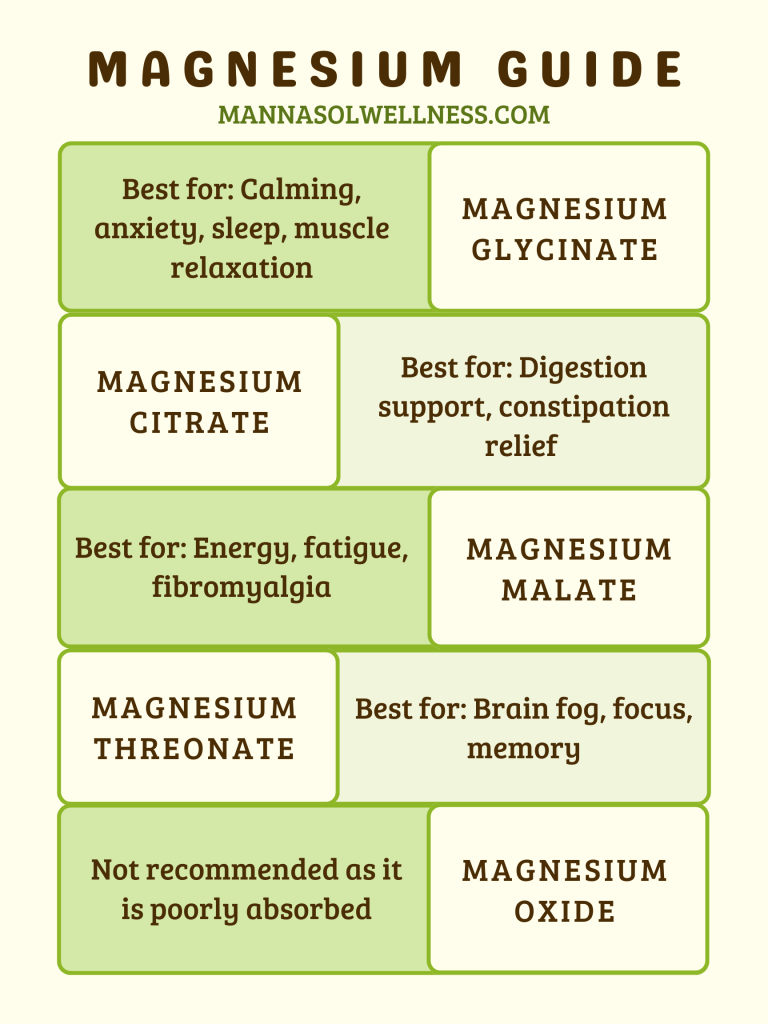
A Simple Shift That Can Change Everything
Magnesium isn’t some trendy wellness hack — it’s a core nutrient your body literally can’t function without.
So if you’ve been feeling “off” — low energy, anxious, tense, wired but tired — magnesium might be the missing link.
Ready to feel better, naturally?
This is the magnesium supplement I personally recommend for majority of people since it’s clean, well-absorbed, and easy on the stomach:
 Manna Sol Wellness
Leave a comment