
The air quality in your home can have a major impact on the health of you and your family. While we often think about diet, sleep, and exercise as pillars of wellness, clean air is just as essential especially since most of us spend the majority of our time indoors.
Poor indoor air quality has been linked to a wide range of health issues, including:
- Eye, nose, and throat irritation
- Headaches and fatigue
- Dizziness or lightheadedness
- Respiratory issues like asthma or allergies
- Heart disease
- Certain types of cancer
The effects can be subtle at first but become serious over time.
What Causes Bad Indoor Air Quality?
Ever walk into a home and feel like the air is “heavy”? That sensation is often due to poor ventilation—a lack of fresh air circulation. But that’s only one piece of the puzzle.
Here are some common sources of indoor air pollution:
- Furniture and mattresses: Most conventional items are made with polyurethane foam and treated with toxic flame retardants that off-gas into the air.
- Lack of dusting: Dust carries allergens, mold spores, and chemicals.
- Cooking fumes: Especially from gas stoves without proper ventilation.
- Aerosols, perfumes, and candles: Scented products may contain volatile organic compounds (VOCs) that are toxic when inhaled.
- Wall plug-ins and air fresheners: Marketed as clean, but many contain phthalates and other harmful chemicals.
- Conventional cleaning products: Many release harmful fumes that linger in the air.
- Pets: Hair and dander can decrease air quality if not cleaned frequently.
Simple Steps to Improve Your Indoor Air
The good news? Improving your indoor air quality is easier than you might think.
1. Open your windows and doors
Let fresh air circulate daily. Even 15 minutes a day can make a big difference.
2. Avoid synthetic fragrances
Ditch candles, sprays, and plug-ins. Use essential oils with a diffuser if you want a natural scent.
3. Switch to non-toxic cleaning products
Choose options that are free of ammonia, bleach, and artificial scents.
4. Dust and vacuum regularly
Use a vacuum with a HEPA filter and microfiber cloths for effective cleaning.
5. Use a high-quality air purifier
Especially in bedrooms or areas with poor ventilation. Look for one with a HEPA and activated carbon filter. I recommend this one: Aroeve Air Purifier
It is affordable and it covers a large amount of square footage. If you don’t want to by more than one, I recommend putting one in the room you spend the most time in. Your bedroom is the perfect place!
Air-Purifying Plants That Help
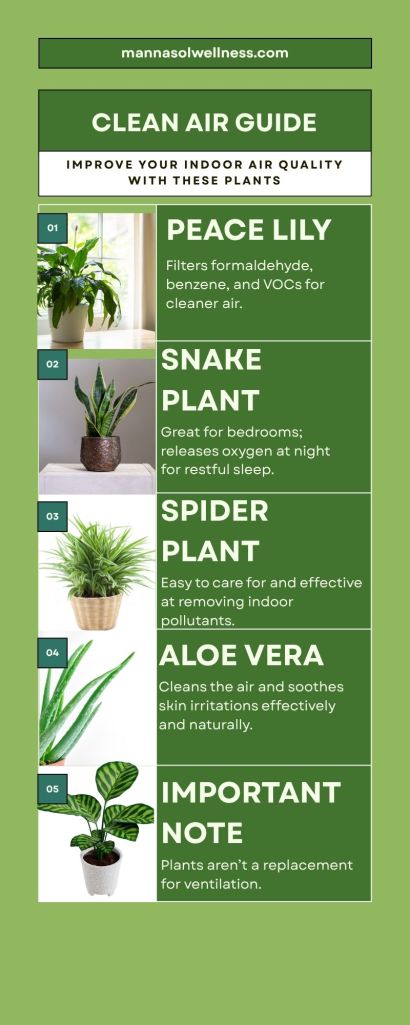
Some houseplants naturally cleanse the air by absorbing toxins and releasing oxygen. Here are a few to consider:
- Peace Lily – Filters formaldehyde, benzene, and VOCs
- Snake Plant – Great for bedrooms; releases oxygen at night
- Spider Plant – Easy to care for and effective at removing pollutants
- Aloe Vera – Cleans the air and can be used for skin irritations
Note: While helpful, plants aren’t a replacement for proper ventilation or filtration.
Final Thoughts
The air you breathe at home matters—more than you probably realize. By making a few simple changes, you can dramatically reduce your exposure to toxins and improve your overall well-being.
Your home should be a place of healing. Start by making the air cleaner.
 Manna Sol Wellness
Leave a comment